AI Demand Sparks Global Surge in Hardware Prices
As artificial intelligence advances at an unprecedented pace, the global demand for memory and GPU resources has surged triggering steep price hikes across the hardware industry. Consumers worldwide are now facing higher costs for RAM, storage, graphics cards, and even processors.

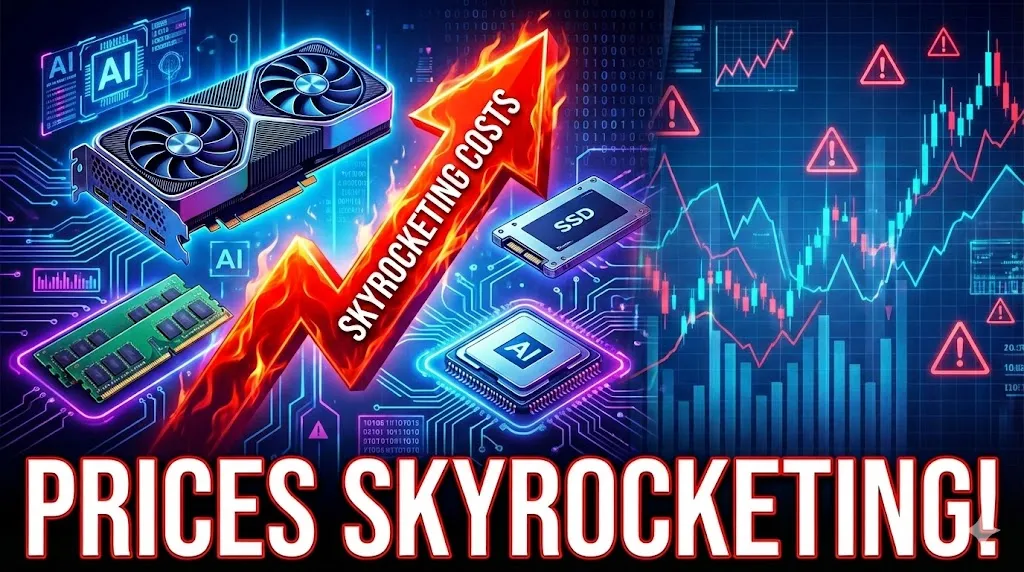
Global Hardware Prices Surge as AI Demand Skyrockets: What You Need to Know
The global tech industry is witnessing one of its most significant price increases in years, with certain PC components jumping by as much as 300%. Consumers around the world have started noticing steep price hikes in RAM, SSDs, GPUs, and even processors.
In a recent TechGuide discussion, industry expert Zaidoun from Expert Mining explained the underlying causes of this sudden surge and what the future may look like for global hardware markets.
Which Components Are Becoming More Expensive?
Across international markets, four major hardware categories are experiencing sharp price increases:
1. RAM (DDR4 & DDR5)
Memory modules have been hit hardest. Both DDR4 and DDR5 prices have risen significantly due to increased global demand and reduced manufacturing output.
2. SSD Storage
SSDs are climbing in price because they rely on the same memory chips affected by reduced production and higher demand from enterprise sectors.
3. Graphics Cards
Although not as extreme as during the crypto-mining boom, GPU prices are rising. Manufacturers are prioritizing large orders from AI and cloud companies, reducing consumer availability.
4. Processors (CPUs)
Modern CPUs have also started to increase in price, although the rise is generally more moderate compared to RAM and SSDs.
These shifts impact desktops, laptops, and prebuilt systems, as memory and storage are essential components across all device categories.
The Real Reasons Behind the Global Price Surge
1. Reduced Memory Production
Leading manufacturers like Samsung and Micron scaled back production after experiencing low demand in previous years. As a result, when demand rebounded sharply, the supply chain could not keep up.
2. Massive Demand Driven by Artificial Intelligence
The rise of AI is the primary driver of current price increases.
Unlike crypto-mining—which centered mainly on GPUs—AI workloads require enormous quantities of:
DRAM
NAND storage
High-bandwidth memory (HBM)
GPUs designed for data centers
Tech giants building AI models are purchasing memory and storage in huge volumes and at any price, pushing global market prices upward.
3. Ongoing Supply Chain Effects
Although the peak of the pandemic has passed, the tech supply chain is still recovering. Delays in component fabrication, shipping, and raw materials continue to influence production capacity.
4. High Demand vs. Limited Supply
With demand outpacing supply, manufacturers take the opportunity to raise prices and compensate for financial losses from past low-demand periods.
Is This Similar to the Crypto-Mining GPU Spike?
There are similarities, but the current situation is much broader.
Aspect | Crypto-Mining Surge | AI-Driven Surge |
|---|---|---|
Main Component Affected | GPUs | RAM, SSDs, VRAM, HBM, GPUs |
Affected Users | Mostly miners | Everyone—consumers & enterprises |
Duration | Temporary | Expected to last longer |
Scale | Large but focused | Global, multi-component, multi-sector |
AI demand affects every part of modern computing, making the impact significantly wider and more sustained.
How Long Will This Global Trend Last?
Industry analysis suggests:
We have already reached a period of high pricing.
Prices may stabilize before gradually decreasing.
A complete return to pre-2023 price levels is unlikely in the near future.
Moderate corrections could appear within 4 to 6 months, depending on global production adjustments.
However, as long as AI infrastructure continues growing rapidly, memory and storage components will likely remain in high demand.
What Should Consumers Do?
1. Avoid Panic Buying
Buying hardware urgently during a price spike can lead to significant overpayment.
2. Upgrade Only What You Need
Focus on essential performance requirements—RAM, storage, or GPU—based strictly on your actual workloads.
3. Wait If Possible
If your system is still functioning well, waiting a few months may save you money as markets stabilize.
4. Consider Minimum Viable Specs
Instead of buying high-end components affected by supply pressure, choose mid-range hardware that offers good value.
Conclusion
The global rise in hardware prices is primarily driven by the explosive growth of artificial intelligence and the immense demand it places on memory and GPU production. Coupled with reduced manufacturing output and lingering supply chain challenges, the market has entered a period of elevated prices across multiple component categories.
While the situation is temporary, it may take several months before meaningful price reductions occur. Until then, consumers are best advised to buy only what they truly need and avoid overspending during this unusually high-pressure market phase.



Comments
0 Comments
Join the conversation