Why Apple’s First Foldable Will Be Called the iPhone Ultra
Moving beyond the "Fold" moniker, Apple’s 2026 debut aims for the ultra-luxury tier. With a 7-inch seamless display and desktop-class multitasking, see how Cupertino plans to justify the $2,400 entry price.

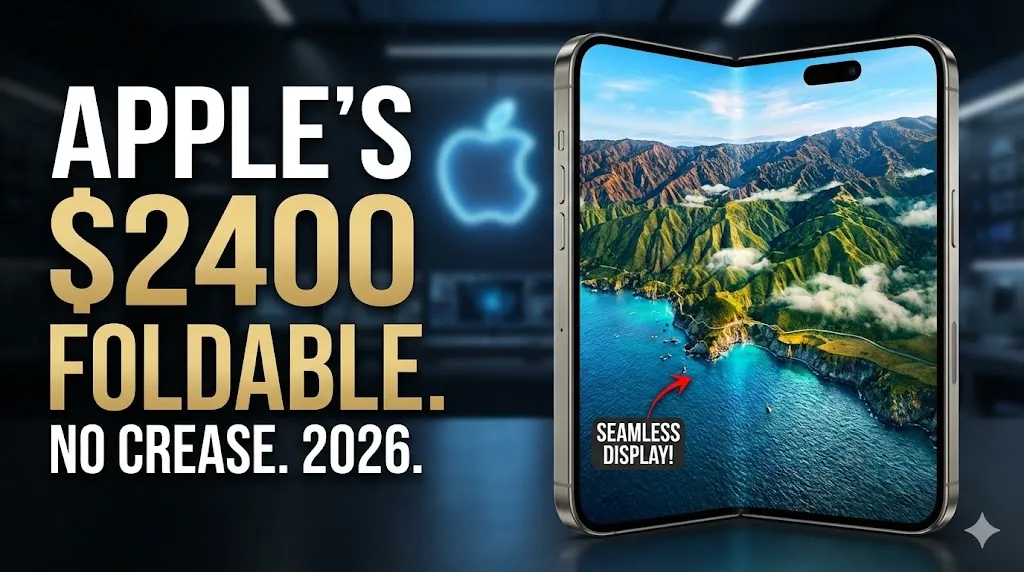
Beyond the Fold: Apple’s $2,400 ‘iPhone Ultra’ Poised to Redefine the Market in 2026
New details emerge suggesting Apple’s foldable will carry the "Ultra" moniker, feature a hybrid operating system, and command a record-breaking price tag.
CUPERTINO — After five years of patent filings, prototypes, and speculation, the picture of Apple’s entrance into the foldable smartphone market is finally coming into sharp focus. According to the latest reports from 9to5Mac, Apple is targeting a 2026 release for a device that will not simply be an iPhone that bends, but a "Halo product" designed to sit at the very top of their ecosystem.
Departing from the expected "iPhone Fold" nomenclature, insiders suggest the device may launch as the iPhone Ultra. This branding aligns it with the Apple Watch Ultra—a device that signifies extreme durability, premium materials, and a feature set that exceeds the standard "Pro" models.
The "Crease-Free" Promise and Design Architecture
While competitors like Samsung are entering their seventh generation of foldables, Apple has reportedly waited for the supply chain to mature to solve the sector's biggest aesthetic flaw: the display crease.
The Display: The device will feature a 7-inch inner display, effectively mimicking the size of an iPad Mini, paired with a smaller 5.5-inch external display. The internal screen reportedly utilizes a "hybrid OLED" and reinforced Ultra Thin Glass (UTG) panel designed to be truly creaseless—a feat no competitor has fully achieved.
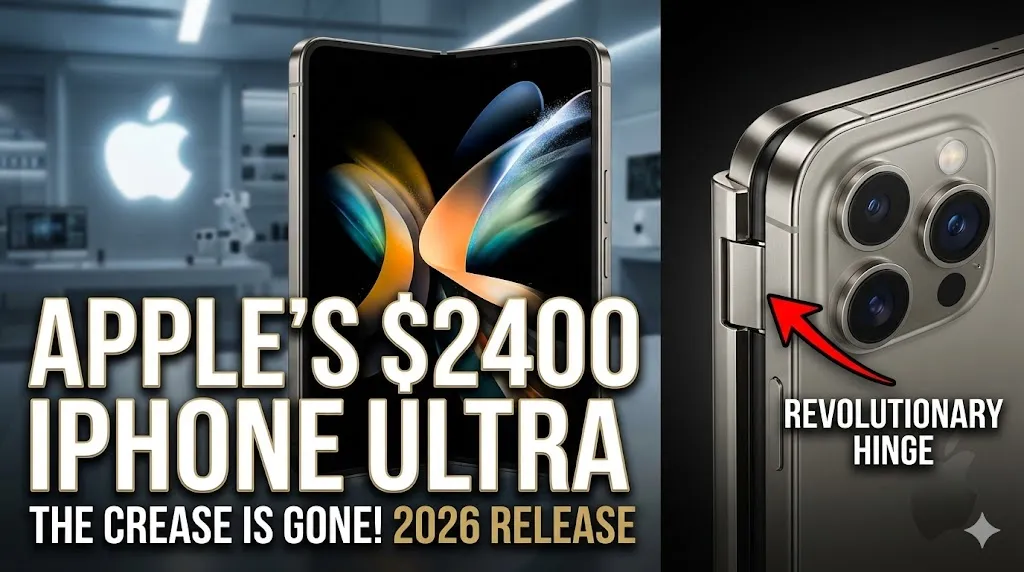
The Hinge: To ensure longevity (targeting 250,000 to 300,000 fold cycles), Apple is employing a new hinge architecture built from a composite metal and carbon structure. This not only aids in dust resistance but provides the necessary tension to keep the screen flat.
Materials: Addressing the bulk usually associated with foldables, the chassis will be constructed from titanium, prioritizing a lightweight profile despite the complex internal mechanics.
Software: The Hybrid Power of iOS 27
Hardware is only half the equation. The report emphasizes that the user experience will be defined by iOS 27, which will introduce a paradigm shift in how Apple handles mobile software.
The iPhone Ultra is expected to run a hybrid operating system that functions as standard iOS on the front screen but transforms into a "quasi-iPadOS" when opened. This includes:
Advanced Multitasking: Features currently exclusive to iPad, such as Split View, Slide Over, and floating windows.
Continuity: Seamless transitions where apps expand from the 5.5-inch outer screen to the 7-inch inner canvas without stuttering or formatting errors.
Dynamic Layouts: New break points and camera preview modes designed specifically for the foldable form factor.
No Compromise on Cameras
A recurring criticism of current foldable phones is that their camera systems are often inferior to their standard "slab" flagship counterparts due to space constraints.

Apple reportedly intends to break this trend. The iPhone Ultra is expected to house the full Pro-level camera plateau found on the top-tier iPhone Pro Max models. The company is refusing to limit camera hardware, using the device's premium positioning to justify the inclusion of their most advanced imaging sensors.
The Price of Innovation: $2,400
Perhaps the most shocking detail from the report is the projected pricing. The iPhone Ultra is expected to start at approximately $2,400.
This price point places it significantly higher than the Samsung Galaxy Z Fold ($1,899) and the Google Pixel Fold series. However, analysts argue that Apple is positioning this device not just as a phone, but as a replacement for both a high-end iPhone and an iPad Mini. By carrying the "Ultra" name, Apple creates a new pricing tier above the Pro Max, catering to enthusiasts and power users willing to pay for the convergence of two product categories.
Conclusion
The 2026 release window suggests Apple is following its traditional playbook: wait for the technology to stabilize, and then release a polished product that addresses early adopter complaints.
With a titanium chassis, a crease-free display, and a price tag that rivals high-end laptops, the iPhone Ultra is shaping up to be Apple’s most ambitious hardware release since the Vision Pro. While the market has been flooded with foldables for years, Apple is betting that consumers have been waiting for the one that finally gets it right.



Comments
0 Comments
Join the conversation